Arlanda Airport
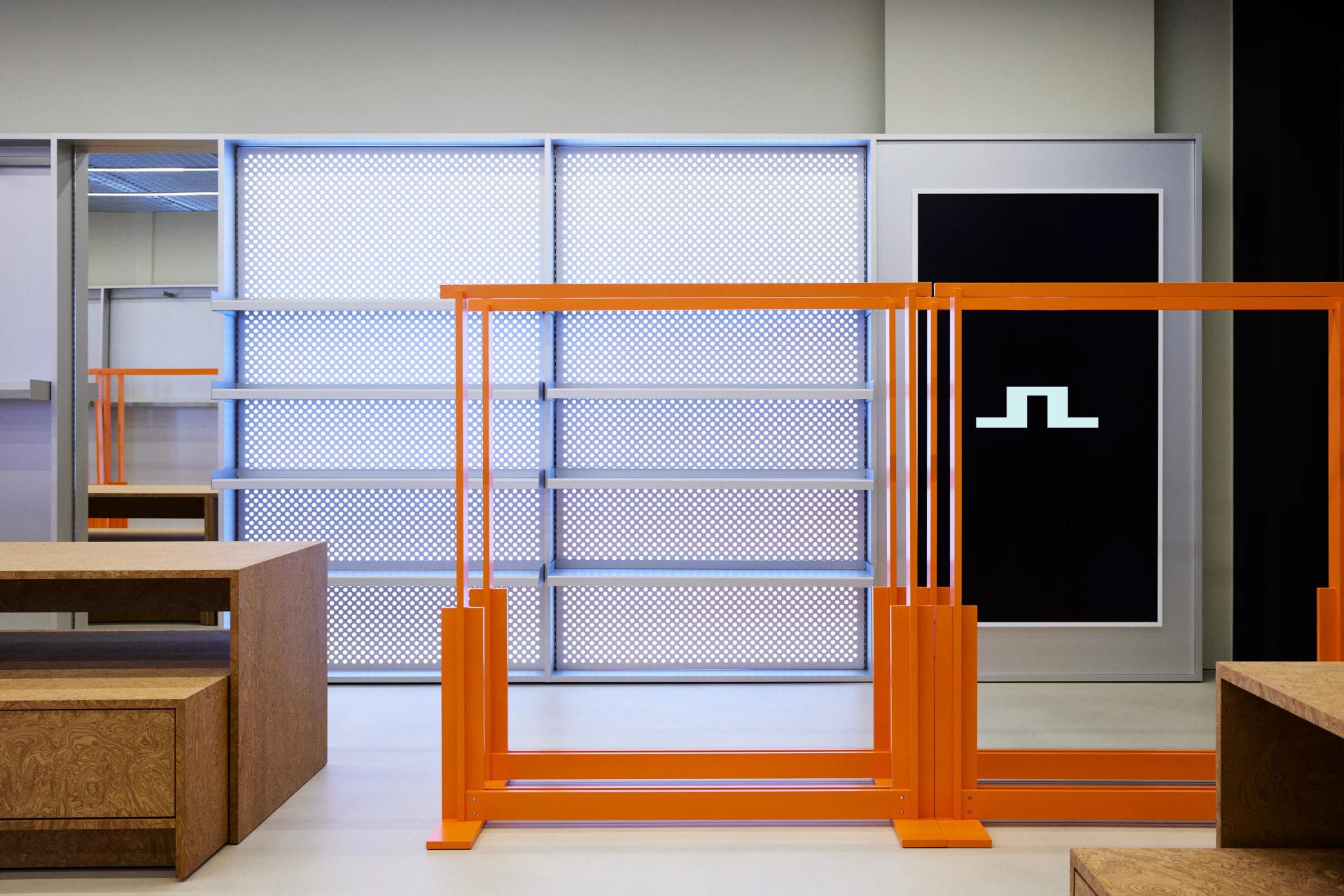
Airport retail is a different discipline. People are distracted, rolling suitcases, checking departure boards. You have maybe eight seconds before they walk past. The first J.Lindeberg store at Arlanda Terminal 5 was designed around that reality — no browsing journey, no slow reveal. Everything is visible from the concourse in a single glance.
The storefront is entirely open, no doors, no glass barrier. A lowered ceiling plane in oiled oak marks the boundary between the terminal corridor and the store. Step under it and the acoustics change. The flooring shifts from the terminal's standard granite to poured concrete with a matte seal. Small moves, but your body registers the difference.
The merchandising system runs on a modular wall of perforated steel panels — matte black, floor to ceiling , with adjustable brass pins and shelving that can be reconfigured overnight. Seasonal turnover in travel retail is relentless, and the fixtures needed to keep up without looking temporary. A single freestanding rack in brushed aluminium holds the capsule edit: five or six pieces that tell the brand story for someone who has never heard of J.Lindeberg and won't be back for months.
▪Location
Stockholm, Sweden
▪Sector
retail, hospitality
▪Services
concept-store, showroom
▪Type
J.Lindeberg
▪Surface
120 m²
▪Creative Director
Thibaut Allgayer
▪Project Manager
Tomai Nordgren
▪Palette
Base
#15130D
Secondary
#98969B
Highlight
#C5C9D7
Accent
#52566B
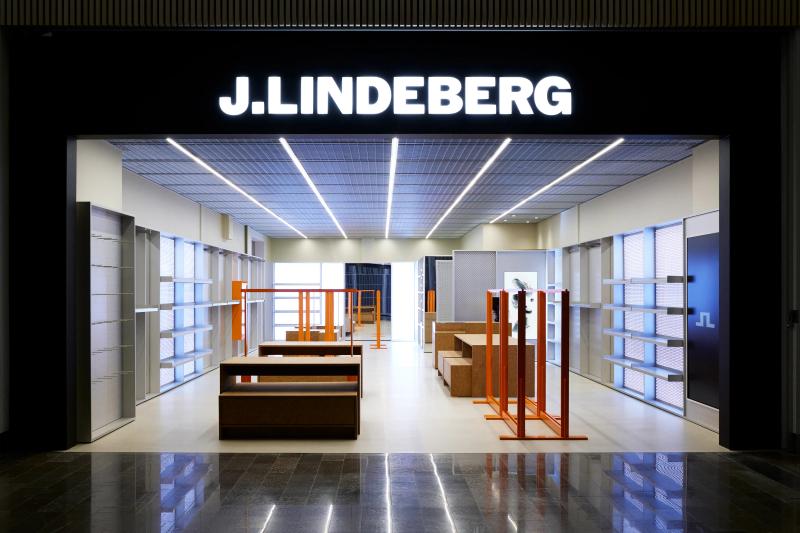
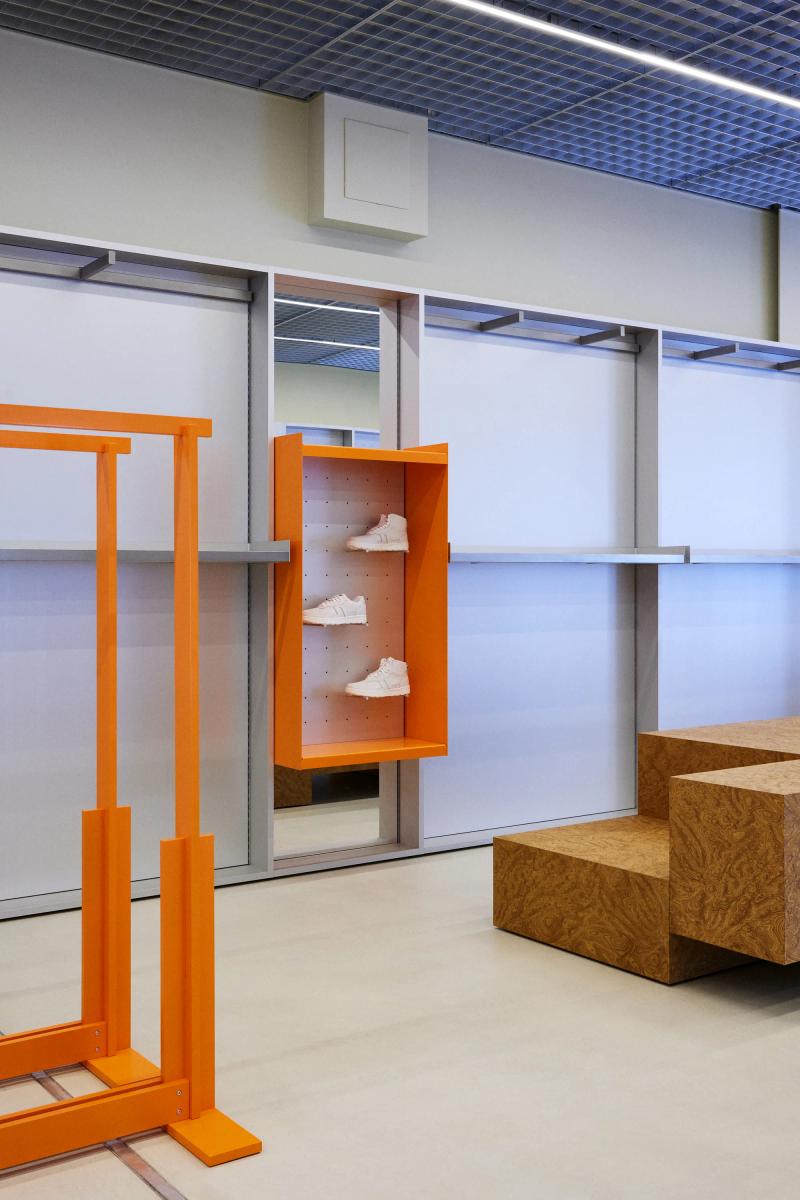
Arlanda Airport reads as compact but deliberate. In Arlanda Airport, Terminal 5 — Stockholm, the plan keeps circulation clear so the room can stay quiet even when it is active. Materials do most of the speaking: wide-plank oak, brushed stainless steel, and matte painted walls that keep reflections controlled. The project keeps the brief grounded in use: Airport retail is a different discipline. People are distracted, rolling suitcases, checking departure boards. You have . The result is observational and precise. Nothing asks for attention, but everything is legible once you slow down.
The sequence feels edited rather than sparse. You move through Arlanda Airport without friction, and each surface carries enough weight to hold the eye. Junctions are clean and repeatable, which gives the small shifts in material a stronger effect. The project keeps the brief grounded in use: Airport retail is a different discipline. People are distracted, rolling suitcases, checking departure boards. You have . What stays with you is restraint. The project avoids gestures and leans on proportion, texture, and sequence instead.
At Arlanda Airport, the layout works like a measured script. The room gives you one clear line of movement, then lets details accumulate at the edges. Junctions are clean and repeatable, which gives the small shifts in material a stronger effect. The project keeps the brief grounded in use: Airport retail is a different discipline. People are distracted, rolling suitcases, checking departure boards. You have . It lands through control, not spectacle. Proportion and material contrast carry the atmosphere from one frame to the next.
▪Spatial Priorities
Circulation clarity
Movement routes are kept legible so browsing, service, and dwell zones do not compete.
Sightline control
Displays and focal points are arranged to maintain visibility while preserving rhythm through the space.
Front/back-of-house separation
Guest-facing sequences are coordinated with service paths to reduce operational friction.
▪Material Notes
Key Materials
Material cues referenced in the project text: Oak, Concrete, Stainless Steel, Brass, Aluminum, Glass.
Color Reference
Image-derived palette baseline: Base #15130D, Secondary #98969B, Highlight #C5C9D7, Accent #52566B. Use as a visual reference and validate against material samples on site.
Finish Notes
Keep finish notes practical: identify high-touch surfaces, wear-prone edges, and cleaning-sensitive materials.
▪Delivery Scope
Concept Development
Spatial concept, layout direction, and design intent framing.
Material & Finish Specification
Selection and documentation of key finishes, fixtures, and surfaces.
Art Direction
Visual consistency across touchpoints, detailing, and spatial expression.
Merchandising / Display Logic
Display zones and fixture priorities coordinated with circulation and visibility.
Related projects