Hologram
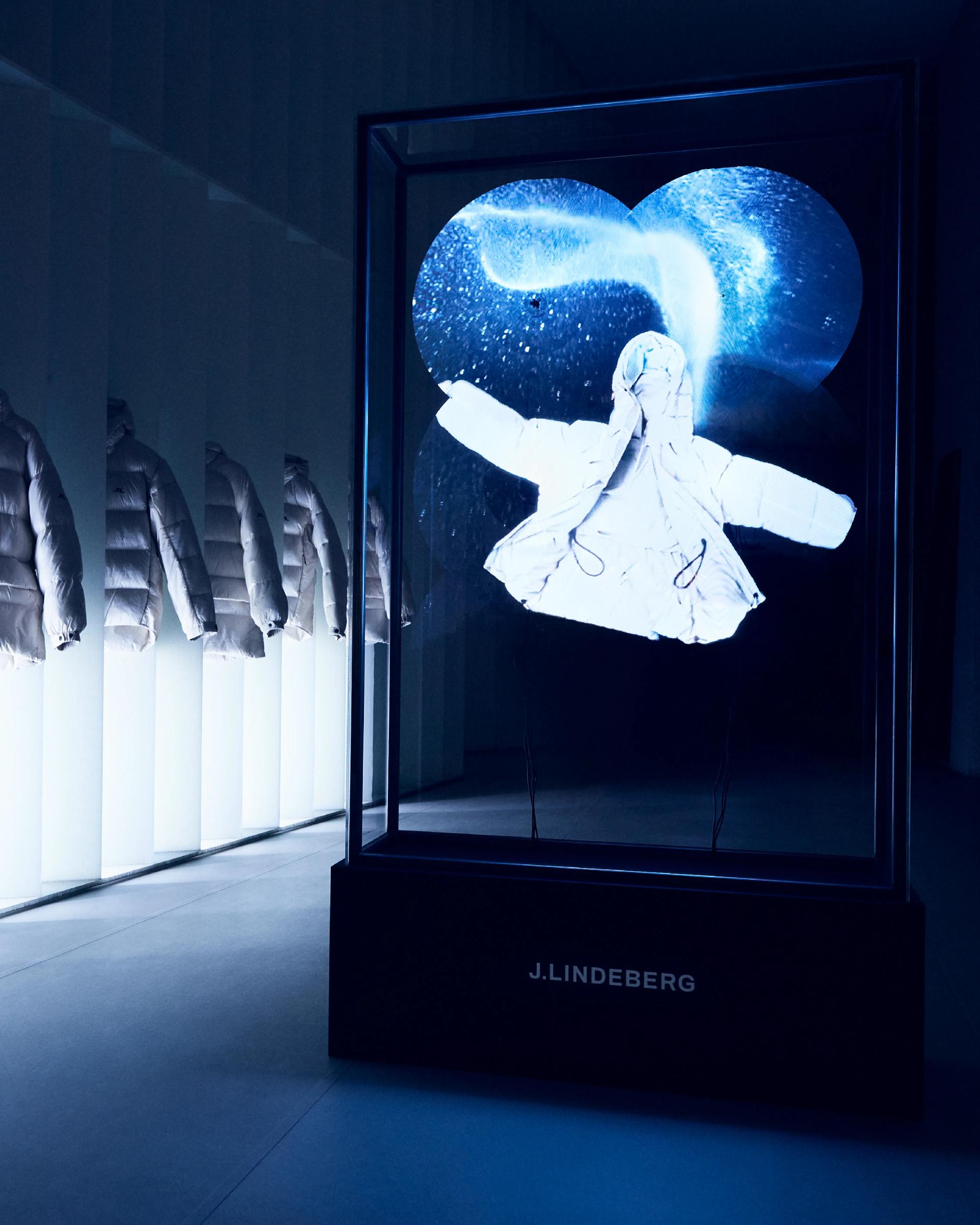
The holographic installation treats the garment as a moving object rather than a static product shot. Light, particle motion, and timing are tuned so the silhouette remains readable while still feeling unstable and alive. The sequence is built around short loops that reward repeat viewing without becoming visual noise.
Instead of decorative effects, the setup uses contrast and rhythm. Dark negative space carries most of the frame, then brighter pulses reveal seams, volume, and proportion at controlled intervals. That pacing keeps attention on construction details rather than spectacle for its own sake.
Material decisions around the display rig are deliberately quiet: matte black supports, low-reflection surfaces, and hidden cable routes that prevent technical clutter. The result is precise and legible, with the digital layer supporting the product narrative rather than replacing it.
▪Location
Stockholm, Sweden
▪Sector
experiential, art-direction
▪Services
exhibitions, brand-spatial-identity
▪Type
Hologram
▪Creative Director
Ray Atelier
▪Palette
Base
#000119
Secondary
#8AB3D7
Highlight
#ECF7FC
Accent
#0C213F
Hologram reads as compact but deliberate. In Stockholm, Sweden, the plan keeps circulation clear so the room can stay quiet even when it is active. Materials do most of the speaking: wide-plank oak, brushed stainless steel, and matte painted walls that keep reflections controlled. The project keeps the brief grounded in use: This holographic display transforms the garment into a living symbol, less a product, more a dynamic narrative. Suspende. The result is observational and precise. Nothing asks for attention, but everything is legible once you slow down.
The sequence feels edited rather than sparse. You move through Hologram without friction, and each surface carries enough weight to hold the eye. Junctions are clean and repeatable, which gives the small shifts in material a stronger effect. The project keeps the brief grounded in use: This holographic display transforms the garment into a living symbol, less a product, more a dynamic narrative. Suspende. What stays with you is restraint. The project avoids gestures and leans on proportion, texture, and sequence instead.
At Hologram , the layout works like a measured script. The room gives you one clear line of movement, then lets details accumulate at the edges. Junctions are clean and repeatable, which gives the small shifts in material a stronger effect. The project keeps the brief grounded in use: This holographic display transforms the garment into a living symbol, less a product, more a dynamic narrative. Suspende. It lands through control, not spectacle. Proportion and material contrast carry the atmosphere from one frame to the next.
▪Spatial Priorities
Circulation clarity
Movement routes are kept legible so browsing, service, and dwell zones do not compete.
Program flexibility
Spatial components are planned for quick resets, changing content, or temporary activation needs.
Lighting hierarchy
Ambient, focal, and task lighting are balanced so materials read correctly without flattening depth.
▪Material Notes
Key Materials
Material specification should be documented from drawing sets and site photography before final publishing.
Color Reference
Image-derived palette baseline: Base #000119, Secondary #8AB3D7, Highlight #ECF7FC, Accent #0C213F. Use as a visual reference and validate against material samples on site.
Finish Notes
Keep finish notes practical: identify high-touch surfaces, wear-prone edges, and cleaning-sensitive materials.
▪Delivery Scope
Concept Development
Spatial concept, layout direction, and design intent framing.
Material & Finish Specification
Selection and documentation of key finishes, fixtures, and surfaces.
Art Direction
Visual consistency across touchpoints, detailing, and spatial expression.
Activation Readiness
Layout prepared for temporary programming, campaign, or event adaptation.
Related projects